First
Construction
Fit-out, structure, MEP, cladding and approvals, on our own contract and with our own crews.
What we buildDubai, United Arab Emirates

About
The company started in Dubai in September 2026. We are not going to dress that up, because it takes a minute to check and pretending otherwise would be the fastest way to lose your enquiry. What follows is everything else: what we do, who does it, what we will not take on, and what you can enforce against us if we get it wrong.
In one paragraph
ALS Building Contracting is a building contractor in Dubai. We take on fit-out and finishing works, building and structural works, MEP, exterior cladding, and the authority submissions that go with all of them. We work on the Dubai mainland, in the TECOM areas and in the Nakheel communities, and the approvals route differs in each.
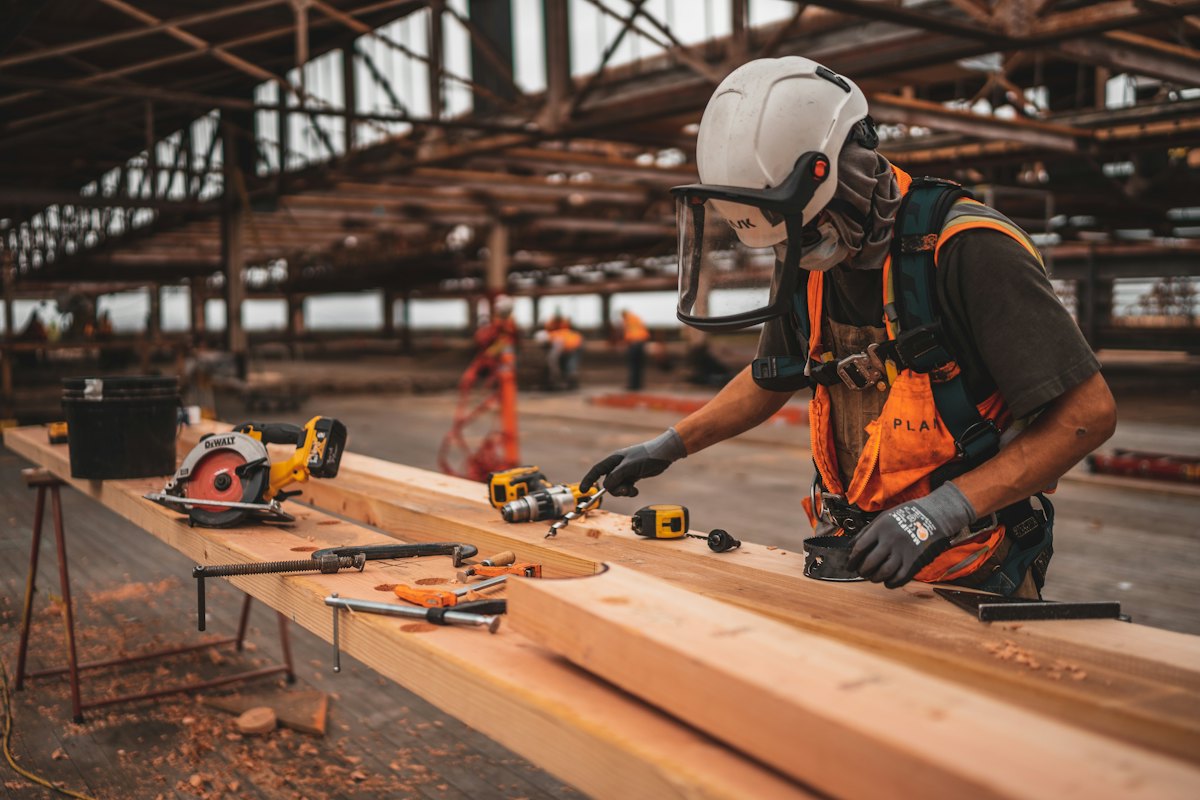
What separates us from most firms of our size is who does the work. Twelve trades are staffed in-house rather than subcontracted: block mason, steel fixer, carpenter, plasterer, gypsum installer, tile mason, painter, electrician, plumber, HVAC technician, MEP technician and general helper.
Those crews are also the second half of the company. When a contractor or an owner needs those trades on his own site, we supply them. It is the same people, the same supervision and the same standard of work, which is the only reason we are willing to put our name on both.
ALS MANPOWER BUILDING CONTRACTING L.L.C · DUBAI, UNITED ARAB EMIRATES
Contractor first
ALS Manpower Building Contracting does two things, and the second one exists because of the first.
We are a building contractor. We take on fit-out, structural works, MEP, cladding and the authority submissions that go with them, and we carry out the work with crews on our own payroll rather than subcontracting each trade. That is the first half, and it is the one the company is built around.
Employing twelve trades directly means we run a standing workforce rather than assembling one per project. So when a contractor or an owner needs those trades on his own site, we supply them. Same people, same supervision, same standard, and we are willing to put our name on both because it is genuinely the same workforce.
The order matters and we are not going to blur it. We are a contractor first. The manpower side is what a contractor with its own crews can offer that a management layer cannot.
Fit-out, structure, MEP, cladding and approvals, on our own contract and with our own crews.
What we buildThe same twelve trades, on your site instead of ours, under the same supervision.
How manpower worksTwelve on the payroll
Twelve trades are on our own payroll. In build order: block mason, steel fixer and carpenter for structure and shell; plasterer, gypsum installer and tile mason for surfaces; electrician, plumber and HVAC technician for services; painter, MEP technician and general helper to finish and to keep the site moving.
The usual arrangement in Dubai is different. The contractor you sign with subcontracts each trade, takes a margin, and manages the interfaces between firms that have no relationship with each other and none with you. It works while everything goes to plan. When it does not, the delay travels down the chain and arrives at your handover date.
Where a package genuinely needs an outside specialist, we name them at the scope stage, before you sign, and they go into the contract as a named subcontractor. What we will not do is present ourselves as the builder and then introduce you to four companies you have never heard of.
Decennial liability
On 1 June 2026 the United Arab Emirates replaced its Civil Code. Decennial liability, which used to sit in article 880, now sits in articles 821 to 824 of Federal Decree-Law No. 25 of 2025. Anyone still quoting article 880 at you has not read the new code.
What it says: where we hold the main contract on a building, we and the engineer are jointly liable to you for ten years from handover for total or partial collapse and for defects that threaten the stability or safety of the structure. Liability does not depend on proving we were at fault. It cannot be excluded or limited by agreement, and a clause that tries to do so is void. You have three years from discovering a defect to bring a claim, and the defect has to arise inside the ten-year window.
We point at this rather than at a guarantee of our own, and the reason is worth stating. A guarantee from a company incorporated in September 2026 is worth whatever the company is worth. The statute is worth the same whoever signs the contract, and it is the floor under every conversation you have with any contractor in this country, including the ones who have been here forty years.
Two honest limits. It attaches to the main contractor, and the new code expressly leaves subcontractors out of that regime, so where we work under a main contractor on your project the chain runs through them. And it concerns structural safety and stability, not finishes. A defective tile is a defects liability period question and it belongs in your contract, which is where we put it.
The questions that do affect whether it is worth anything are whether the company still exists in year seven, whether it carries insurance, and whether there is a guarantee behind its performance. Those are the right questions to put to us, and we would rather you asked them than took our word for anything.
The same for everyone
Insurance is the one form of proof where a new contractor and a forty-year-old contractor stand in exactly the same place. A policy is either in force or it is not, and the age of the company buying it changes nothing about the cover.
Certificates available on request, and named in the contract for your project.
Attribution, in full
The company is new. The people are not. Below, each person's own history is set out with the project and the contractor it was performed for. None of it belongs to this company and none of it is presented as though it does. If you want to verify any of it, ask us and we will tell you who to call.
CEO
Czech national, resident in Dubai.
Eighteen years in construction, nine of them in the UAE. Signs every contract this company enters into.
a.melnyk@als-manpower.aeManaging Director
[Background and years in the trade, to confirm]
+971 50 934 1171
j.inyat@als-manpower.aeCommercial Director
[Background and years in the trade, to confirm]
+971 50 949 1805
e.abukarov@als-manpower.aeProjects Manager
Twenty-two years in the trade, fourteen of them in the UAE. Ran fit-out packages on Bluewaters Residences for Khansaheb Civil Engineering, and villa refurbishment on Jumeirah Islands for Al Naboodah Contracting.
Those projects belong to those contractors, not to this company. Ask and we will tell you who to call.
MEP Supervisor
Nineteen years in the trade, eleven of them in the UAE. Electrical and HVAC installation on Dubai Hills Estate villas for ASGC Construction, and tower MEP fit-out in Business Bay for Dutco Balfour Beatty.
Those projects belong to those contractors, not to this company. Ask and we will tell you who to call.
Four refusals
Cheap to write, and almost nobody writes it.
We are a contractor, not a design practice. If you need drawings we will tell you which consultants to speak to and we will build to whatever they produce.
Classification sets the height and category of building a contractor may take on, and a new company starts at the bottom of the scale. We will tell you at the first conversation whether your project is inside ours. A contractor who takes work outside his classification commits an offence under Dubai Law No. 7 of 2025, and the problem lands on your project, not only on him. Ours is Dubai Municipality building contractor classification G+4.
Roads, bridges, mains and district cooling plants are awarded on prequalification: audited accounts across several years, comparable completed projects and a matching classification. We have none of those yet, and a contractor who tells you otherwise is telling you something about himself.
We work in Dubai. Abu Dhabi and Sharjah are a licensing question rather than a distance one, and until that licence exists we will say no rather than work on somebody else's.
Closing
We have answered three of them on this page. Tell us about your job and we will answer the fourth.
Start here